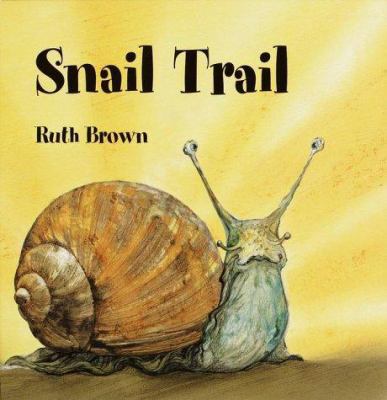
Nothing irritates me more than when children’s books and toys are incorrect scientifically. The mistake I see so often is the placement of a snail’s eyes.
A snail ‘s eye spots are at the tips of its longer tentacles.
Now look where these authors and toymakers have placed the eyes! (And these are some of my granddaughter’s favorite toys!)
These eyes are accurately placed.
And don’t get me started about worms. They don’t even have eyes! Why would you need them if you lived underground?
Do you practice the art of noticing? It requires both effort and intention. I discovered four new caterpillars on my recent walks. The patterns and designs always catch my attention, but this time I was drawn to the colors of their heads. Grateful that God values diversity!
It’s been four years since I’ve taught science, but I am back teaching young scientists part time at the Collab!
We began lab with the question, “What is Science?” We will study Earth, life, and physical sciences, as well as lab skills. “The works of the LORD are great, Studied by all who have pleasure in them.” Psalm 111:2
Bubbleology is an engaging way to begin the year! Lots of opportunities to wonder and question! New vocabulary included pipette.
Why are bubbles usually spheres? Will the bubbles still be spheres with these bubble blowers?
What shape is half a bubble? What do you observe when the bubbles connect to one another?
Do you see the bubble inside the bubble? Why didn’t the outside bubble pop?
How does this cube bubble form? Watch full screen. Make a cube out of straws or other toys.
What color are bubbles? Why does the color seem to change? What other living and nonliving things are iridescent?
Why do bubbles pop? Why don’t they pop when gloves are worn?
We collaborated throughout the lab.
To extend learning at home, try making a bubble snake. How does a bubble snake form when you blow through fabric? What happens when a different fabric is used? Watch full screen. (Food coloring is optional.)
I didn’t have to go far to find something new to share with my blog family. This little garter snake was sunning itself on top of a bush in my front yard. I almost missed this common predator. Do you see it?
Garter snakes are harmless to humans and a welcome addition to your garden. They are easily recognized by their stripe pattern. Read more about this little reptile.
Studying backyard animals is a meaningful project for your child or students:
Fun Fact: Garter snake babies are born alive unlike many other reptiles.
Watch full screen. Check out the interesting way they hibernate!
I visited our local plant nursery to take a few photos of flowers but happened upon a black swallowtail caterpillar on a dill plant. There was even a tag that stated that dill plants attract these caterpillars. What an unexpected, lovely surprise!
“And just when the caterpillar thought the world was over, it became a butterfly.”
Watch full screen. Check out the bizarre defense mechanism.
I collect hearts I find in nature. I usually wait and share them on Valentine’s Day as a gift to you, but I’ve found so many that I decided to share a little extra love now.
“When you realize heart and nature contain the same letters, it all starts to make sense.” Unknown