When I walk, I always look for something that doesn’t quite fit, usually a color or shape, and today I spied this little jumping spider resting on a leaf. I was only able to take one quick photo before it disappeared into the foliage.
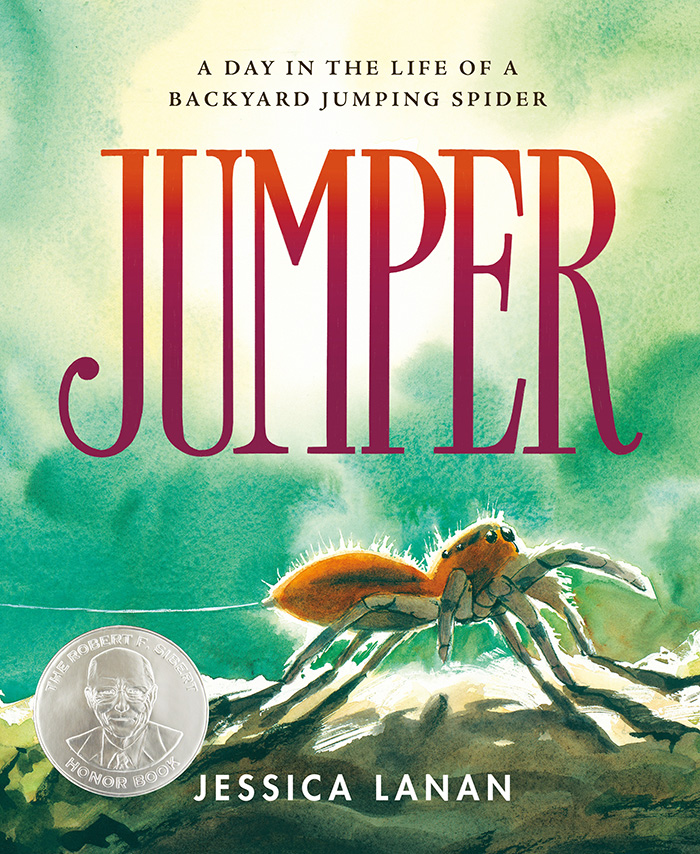
Those eyes are memorizing! Jumping spiders don’t spin webs; instead, they pounce on their prey like a cat or a fox.
I’ve encountered several animals in the middle of their meals. (I’ve shared before that stories seem to find me.) Use these photos to launch a discussion about food chains and food webs.
This subject has rich natural vocabulary: predator, prey, carnivore, producer, consumer, energy, herbivore, omnivore, scavenger, and decomposer.
Remember that every living thing is part of a food chain and that every link is critical to its survival. Food chains (webs) begin with the sun and end (or begin again) with decomposers.
Watch study jams about food chains and about food webs. Quizes are available too.
Add Who Eats Who by Teresa Heapy and Who Eats What by Patricia Lauber to your children’s library.
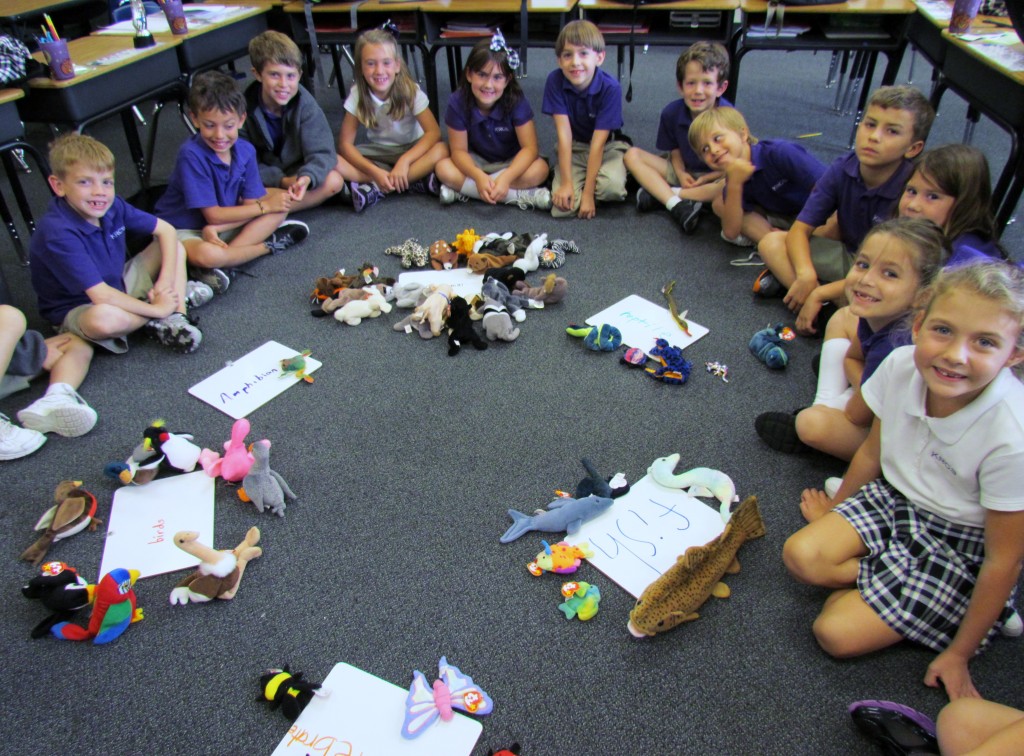
I used Beanie Babies in my lab in a variety of hands-on lessons. Classify them into habitats/ecosystems, such as polar, woodlands, jungle, or ocean, as well as into animal groups (reptiles, amphibians, mammals, birds, and fish) or into vertebrate and invertebrate groupings. My youngest scientists sorted the beanies by the number of legs on each. Tie in those math concepts – set, equal, more, less, greater than or less than. Use beanies or other stuffed animals to create food chains or webs too!
Another hands-on activity is to give each child a card or small dry erase board with the name of an animal written on it. Ask the participants to sequence themselves into a food chain.
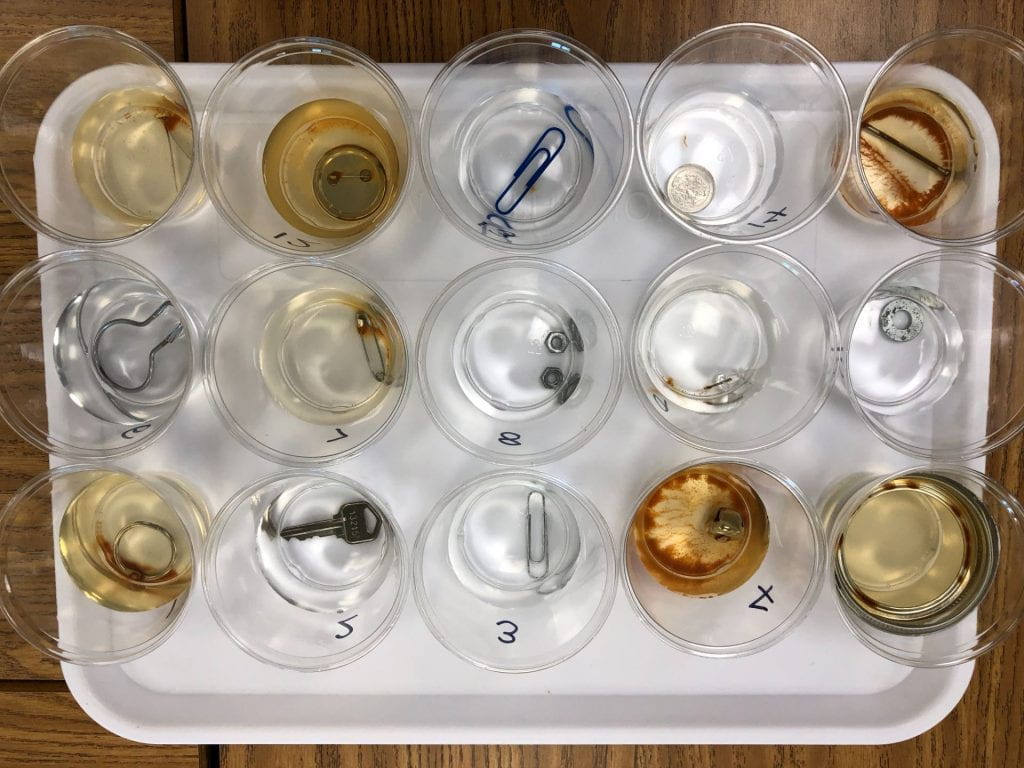
I walked by this rusted fire hydrant. Do you know which materials rust and why?
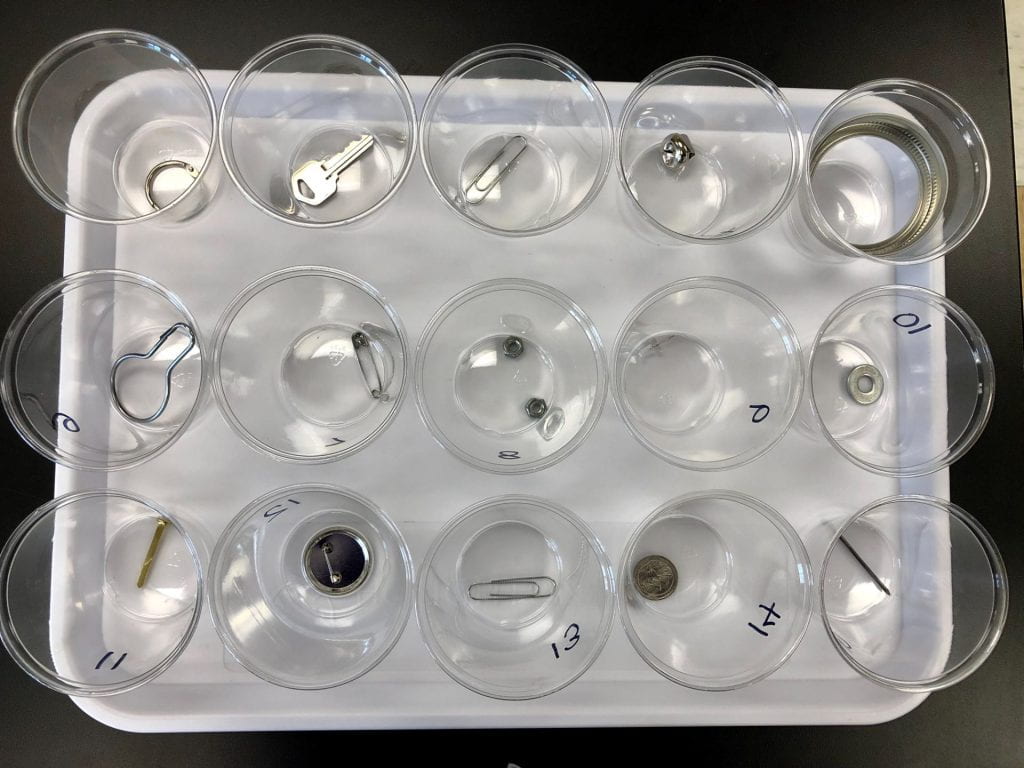
This is an easy experiment to do at home or at school with your children. Collect small objects and hypothesize which ones you believe will or will not rust. Cover the items with water in small cups to test your hypotheses. Analyze the data and draw conclusions.
Go here and here for further directions and an additional investigation with steel wool.
Learning about the life cycle of butterflies and moths is a favorite study in both preschool and elementary school. A butterfly goes through complete metamorphosis: egg, larva, pupa, and adult.
Many classrooms and families order the Painted Lady Butterfly Kit to observe at home. Learn about my classroom experiences here and here.
While watering my garden, I spied itty bitty moth eggs. Look for them on the underside of leaves.
I have encountered a variety of caterpillars on my recent walks on the Greenway. I always look for them on the railings along the path. So much diversity!
The Butterfly Encounter at a local nature center was an engaging way to observe butterflies.
Some other recent butterfly finds:
An informative book (from a wonderful series) to add to your collection:
Is it a moth or butterfly, frog or toad, bee or wasp, duck or goose, snail or slug, turtle or tortoise? So many species are similar, yet unique. Let’s add dragonfly and damselfly to that prior list. Do you know the similarities and differences between the two? The first photo is a dragonfly. Now look at the following photo of a damselfly. What do you notice?
Damselflies are usually smaller and have slimmer bodies than dragonflies. When resting, most damselflies fold their wings along their bodies, unlike dragonflies which hold wings flat and away from their bodies. Dragonflies’ large eyes are close together or touching, while a damselfly’s eyes are separated on each side of its head. Both go through metamorphosis during their life cycle. Eggs are laid in water or on aquatic plants, and the nymphs will spend this stage in the water before they climb out for their final molt and reveal the adult form. Neither insect stings and both prey on other insects.
Read more about damselflies here. Go here to view full screen.
Compare and contrast is a standard you’ll see listed in all subject areas. A Venn diagram is often used to practice this skill with common attributes placed in the intersection. Use your studies of the beforehand listed animals to work on this skill. Go here for a Venn diagram lab.
I like to design cards and other paper products using calligraphy, watercolors, and hand-carved stamps. When I watched a webinar about pressing flowers by Flower Press Studios, I knew that would be a fun add-on and in addition what a special way to preserve my garden flowers.
I collected easy to press flowers for my first attempt. I’m looking forward to pressing pansies this fall and violets next spring.
The flowers and leaves are placed face down between paper and cardboard (which came with the press I ordered) before the press is tightened.
After a couple of days, the moist paper needs to be changed, so that the flowers don’t mold. This is how the blossoms appeared when I opened the press to add new paper.
I need to wait a few weeks before they are completely pressed, and I can create with them. Lessons on gluing flowers and pressing thicker flowers are next for me.
I thought I spied a spider, but I only counted six legs. I also noticed antennae and three body parts, so I concluded it was an insect, but what species? Do you know?
After a little online searching, I surmised that I had captured a photo of an assassin bug. It is venomous and paralyzes its prey by inserting its proboscis into the victim. Although not aggressive toward humans, the bite is extremely painful.
Read more about assassin bugs here and here. Go here to see more photos.
I have seen a number of caterpillars, but this was a new species for me – the milkweed tiger caterpillar. It reminds me of a fuzzy tiger but resist the urge to touch because the hairs can cause a rash.
These caterpillars are found chomping on milkweed plants in the Eastern United States, like the more familiar monarch caterpillar.
They accumulate milkweed toxins as they eat which is their defense mechanism. The milkweed glycosides also protect monarch caterpillars and butterflies.
The moth with its gray wings is much plainer than the larval stage.
Insects are everywhere – crawling on the ground and foliage, tunneling in the soil, flying in the air, and even swimming in ponds. They are not only the largest group of organisms on Earth, they are also the most diverse.
You’ll want to add this recently published book about searching for insects to your children’s library. On your next hike around your neighborhood, a local park, or your backyard, how many insects will you discover?
I’ve recently encountered this varied collection of insects on my walks.
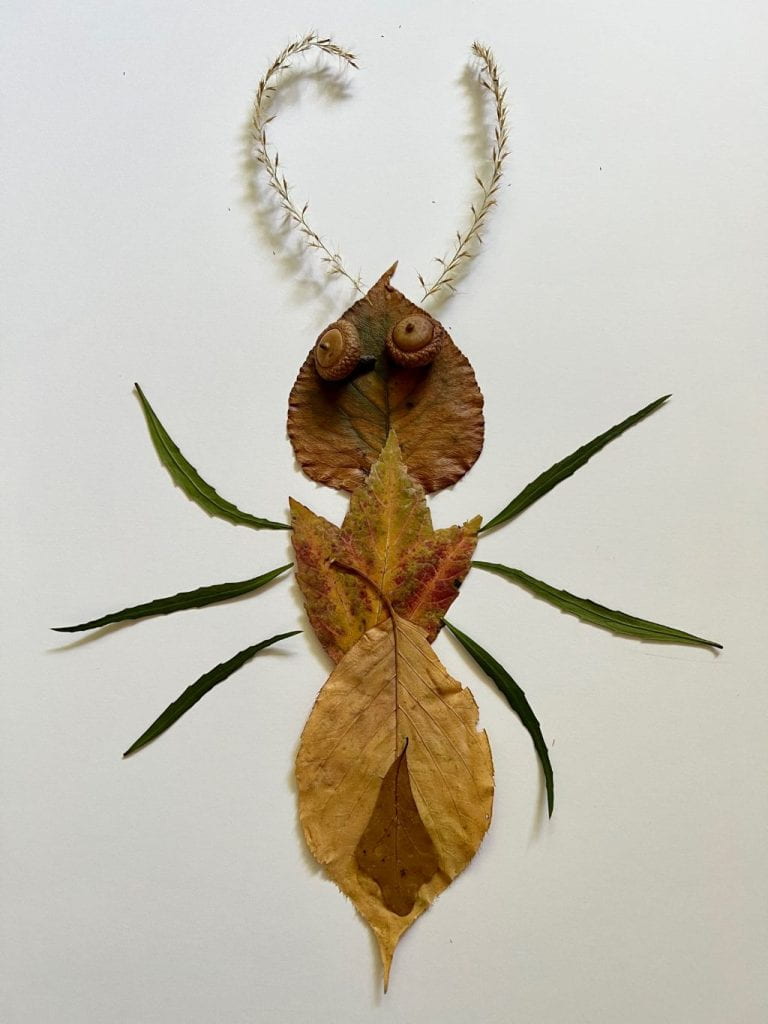
After studying insects, task your students or children with creating an insect from recyclable materials or design an original insect from paper with an emphasis on symmetry. (See previous post below.) Another option is to find natural objects on the ground or from branches you prune.
I’ve written numerous posts about insects. To search for a specific insect (wasps, ladybugs, stink bugs, beetles, butterflies, grasshoppers, ,,,,), go to the search bar at the top right corner above.






 Related Posts