Unexpected outside discoveries are the best, but intentional searches sharpen observational skills. I often challenge myself to find something specific when I walk in the woodlands. Seasonal scavenger hunts are fun for scientists of all ages!
I was looking for a sign of animal life in the winter woodlands. Did I find it?
As the temperature rose, the snow falling in Atlanta turned to freezing rain. Icicles hung from bending branches and the trees glistened. I was unable to safely drive to the Greenway, so these photos are from my backyard.
Do you know the difference between sleet, hail, and freezing rain?
Icicles bring back childhood memories from my years in New York and Wisconsin. Threatening icicles hung from the edges of rooftops which we knocked down joyfully with snowballs.
Do you know the history of ice use? It wasn’t too long ago that families didn’t have freezers and consequently ice was not readily available. What an interesting way to integrate history!
Watch the ice cutter’s chant from the movie, Frozen, full screen here.
Research ice carving to integrate art into your study of ice. Freeze ice in a variety of containers in your freezer or outside and then carve (chisel) them.
Birds braved the rare Southern snowstorm to eat at my suet feeders.
An extreme cold warning is in the forecast. How do birds survive the winter months? You may have noticed that birds fluff up their feathers to trap body heat in air pockets. Learn about other adaptations in the following video. Watch full screen here.
Hibernation and Brumation are not the only ways animals prepare for winter. Some animals grow a winter coat that insulates them from the cold, similar to the way we put on a warm outer covering when temperatures fall.
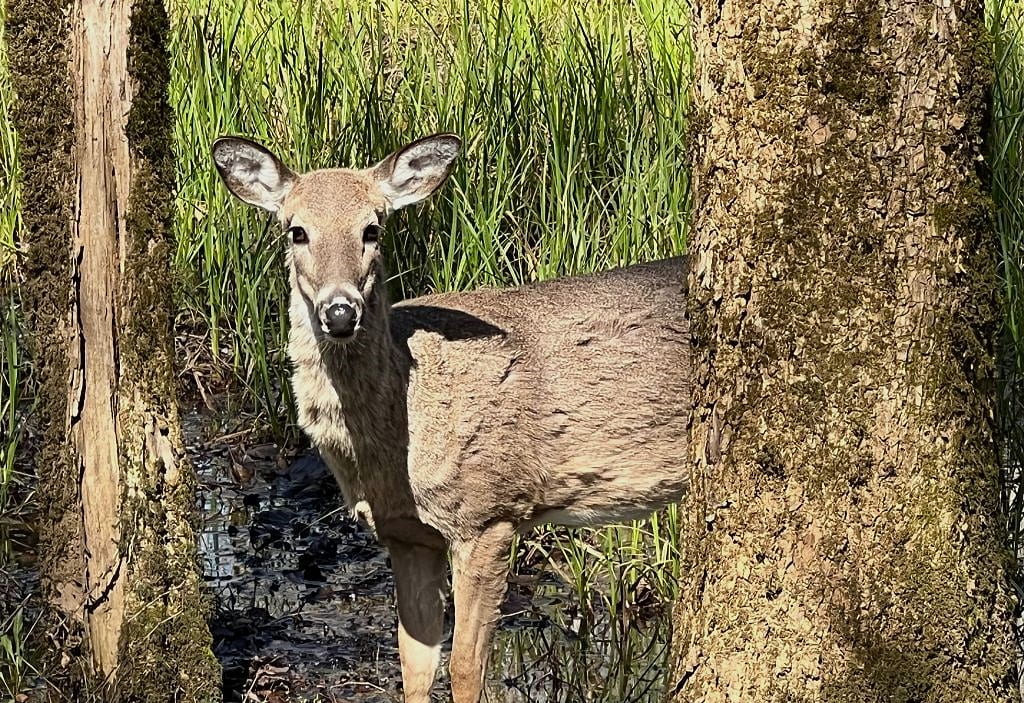
This deer and I saw each other on a recent walk. Her coat has grown thicker and darker.
Last spring, this doe was molting. The process lasts only a few weeks and usually begins at the top and moves downward.
During warm months, the deer I spy on my walks have lost their heavy fur pelages and have replaced them with new reddish coats.
Some winter coats even change color. Watch full screen here.
How do woodland animals survive the winter cold? Is there anyone tucked away in these tree cavities? Although the forest is quiet, I know that many woodland animals are still nearby.
Little Owl’s Snow is a new favorite book and a simple text to introduce hibernation to young scientists. The information is correct, and the illustrations are engaging. Watch full screen here.
Over and Under is an imaginative way to explore hibernation and other ways that animals survive winter months. Watch the animated reading full screen here.
I recently discovered this charming picture book. Soon to be a Nana myself, I will be adding this to my library. Watch full screen here.
Which animals hibernate? Do reptiles and amphibians, as well as mammals. sleep through the winter months? Do invertebrates hibernate? Watch full screen here.
Have a few extra minutes? Ask students whether they would rather hibernate (sleep) for a couple of months or migrate to a new place and live there for a time. Discuss pros and cons. I’ve always been surprised at young scientists’ reasoning.
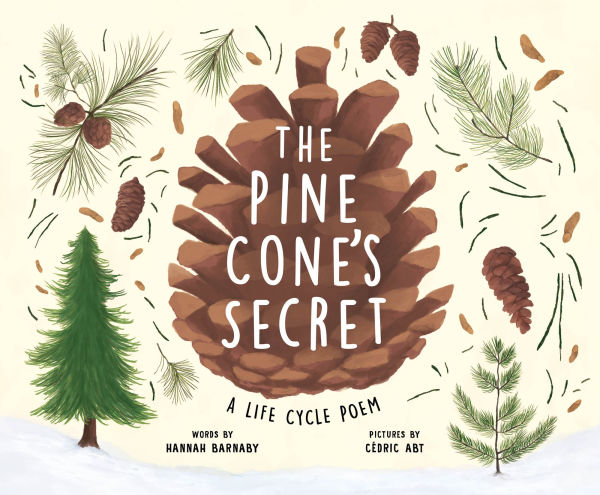
I’m aways looking for new species of cones to add to my collection. The cone in the top photo I discovered in Italy and the second photo are cones I found in Maryland over the holidays. Trees that bear cones are conifers. They may or may not be evergreen.
My largest and smallest species of cones:
Conifers have two types of cones: pollen cones and seed cones. Watch full screen here.
An easy science investigation with cones. (You do not need to use boiling water.) Does the age, size or species of the pinecone change your results? What happens when you alter the temperature of the water? Watch here full screen.
Also try planting seeds from a pinecone. Watch full screen here.
Have you seen ducks or geese swimming in ponds during the winter months? How can they survive the cold-water temperatures? What do you think? On a recent trip to Maryland, I watched these geese on the pond when temperatures were below freezing and flurries covered the ice.
Did you notice that part of the pond isn’t frozen? Waterfowl need water to drink, so if you observe ducks or geese closely, you will see them swim in circles to ensure a portion of the pond doesn’t completely freeze.
Waterfowl are designed to withstand freezing temperatures. Downy feathers provide insulation and standing on one leg helps conserve and regulate heat. The vascular system in which arteries and veins are closer together helps warm the blood in their legs. You will often see a goose’s beak tucked inside its feathers for warmth.
Related Posts
Go here to see how my lab ducks survived the ice and cold.
Ducks continually preen themselves to spread oil that also helps maintain body temperature. Learn more in the lab here.